
info@lotusofindia.com
Get a taste of historic splendor at the heart of the European continent
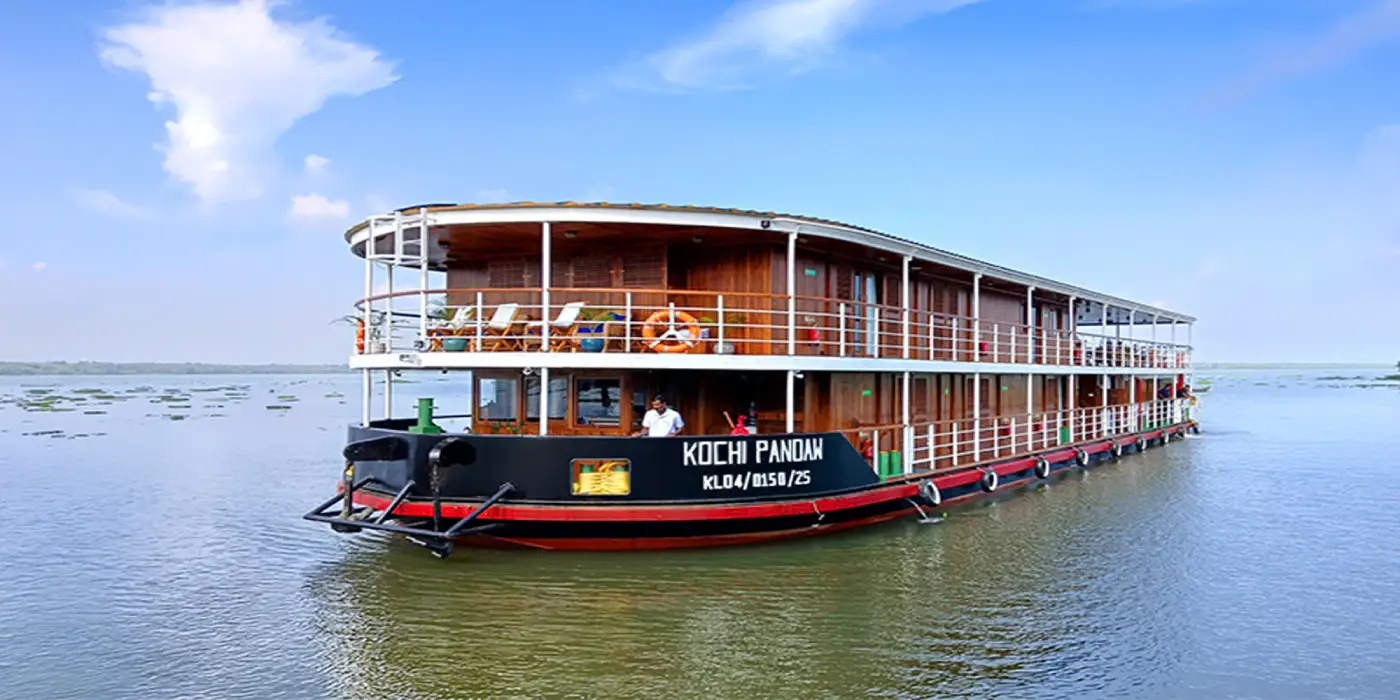


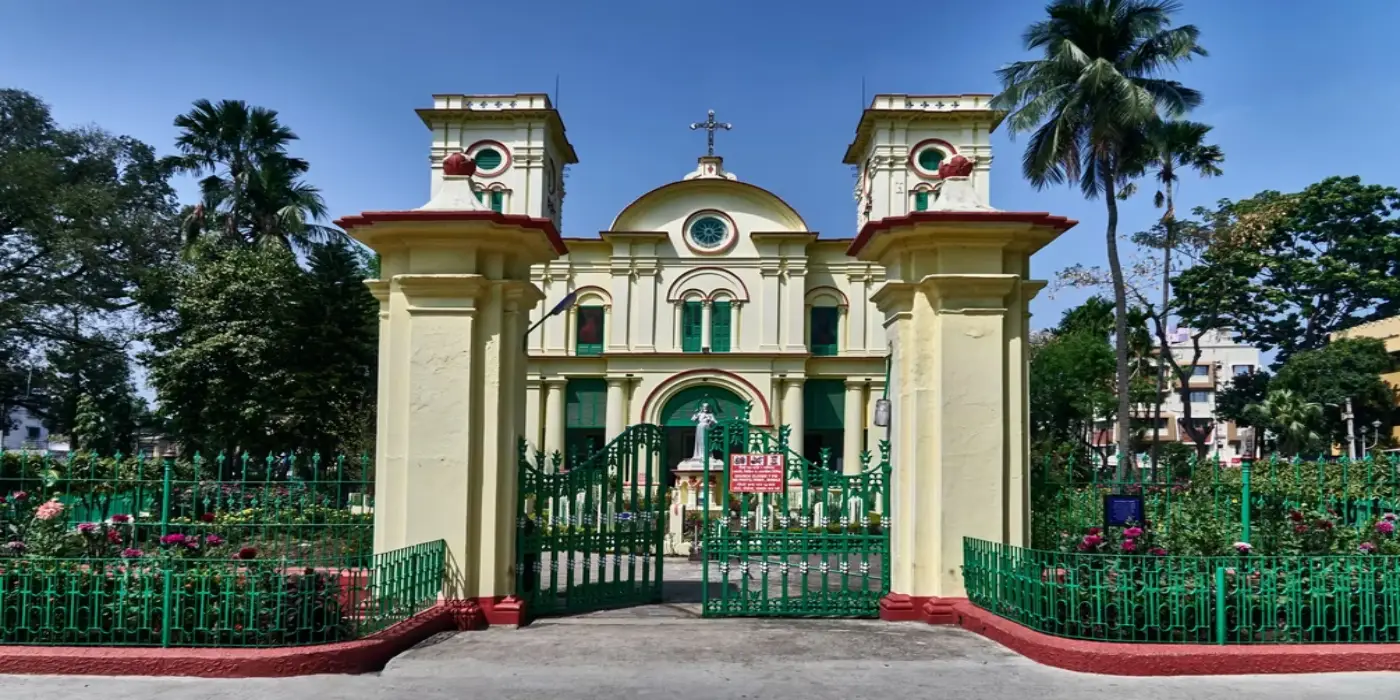
Transfer from the meeting point in Kolkata to embark on your Pandaw ship. Set sail down the Hooghly River, an important distributory of the Ganga to Chandernagore, a French possession until 1950. Stroll along the riverside promenade, visit the 18th century church and Dupleix’s House, the erstwhile Governor-General of French India. Return to the ship and continue upstream past the old Dutch settlement of Chinsura and the Portuguese settlement of Bandel.
Land at the country town of Kalna and take rickshaws to see a group of some of Bengal’s most attractive terracotta temples, as well as the unique Shiva temple with concentric rings made up of 108 lesser shrines. On the way back to the ship explore the colourful local market full of fruit sellers and fish mongers. Continue sailing towards Mayapur to explore the vast new ISKCON (International Society for Krishna Consciousness) temple which dominates the skyline. As the headquarters of ISKCON or the Hare Krishna movement, the temple receives over a million singing and dancing devotees a year from around the world.
Set off to discover the brass-working village of Matiari. Interact with the local artisans learn how these skilled craftsmen all specialise in a different process – from beating the metal, to etching the designs. Witness the whole process involved to create brass water pots, trays and other vessels Later, cruise on past the battlefield of Plassey where, in 1757, Robert Clive, the Commander-in-Chief of British India, defeated Siraj-ud-Daulah, the last independent Nawab of Bengal.
Take an early morning walk to the Khushbagh, a peaceful Mughal-style garden that encloses the tombs of Siraj-ud-Daulah – the last independent Nawab of Bengal – and his family. Continue cruising towards Murshidabad to where the great Hazarduari Palace dominates the waterfront. Explore the city, a hidden architectural gem along the river with dramatic, whitewashed, colonial-era structures including Katra Mosque and Katgola palaces.
Cross from the Lower Ganges or Hooghly River to the Ganges itself through the Farraka canal and lock, that was constructed 1963-75. Passing into the great river the great Farraka barrage will be visible just downstream. This effectively dams the Ganges and strategically controls the flow of water into neighbouring Bangaladesh. Enter a section of river rich in bird life, before stopping at Samtaghat, otherwise known as Raj Mahal.
Passing the confluence of the Kosi river that flows down from Nepal, moor at the pretty town of Bateshwarsthan to uncover the 8th century Buddhist site of Vikramshila, one of the two most important centres of learning in India during the Pala Empire, along with Nalanda.
Sailing along this stretch of the river provides an opportunity to spot the rare Gangeatic dolphins. Land at Bhaglapur, a centre of silk production, and visit the 18th century mansion of the Collector, Augustus Cleveland.
Munger is now a large and industrialised city but has an interesting history. In 1762, Mir Qasim, the Nawab of Bengal, shifted his capital from Murshidabad to Munger, and established a firearms manufacturing centre here. Explore the Mughal fort, East India Company cemetery and step inside the Bihar School of Yoga founded in 1964 by Satyananda Saraswati. One of the leading yoga schools in the country. The institution has developed yogic techniques through a synthesis of traditional yogic, vedantic and tantric practices and contemporary health science.
Munger is now a large and industrialised city but has an interesting history. In 1762, Mir Qasim, the Nawab of Bengal, shifted his capital from Murshidabad to Munger, and established a firearms manufacturing centre here. Explore the Mughal fort, East India Company cemetery and step inside the Bihar School of Yoga founded in 1964 by Satyananda Saraswati. One of the leading yoga schools in the country. The institution has developed yogic techniques through a synthesis of traditional yogic, vedantic and tantric practices and contemporary health science.
Stop at Mokama, once home to Jim Corbett the naturalist and protector of the Indian tigers. Surrounded by farmlands, Mokama has the second highest production of lentils in the country. Learn about the freedom fighters from Mokama such as Lalldin Saheb, whose during the freedom struggle was sentenced to jail during the British rule.
Explore Barh, a town famous for Hindu ritual cremation at Urmanath and the Alakhnath Temple.
Disembark your Pandaw ship early and drive to the archaeological site of Nalanda, the great 5th century Buddhist university. Discover the monumental red brick walls and stupas standing on the site of what was the longest running university in Indian history. Immerse yourself in the tranquil surrounds of this UNESCO World Heritage Site which is thought to have accommodated over 10,000 students and hosted Buddha Siddhartha himself. Continue to Bodh Gaya, another UNESCO World Heritage Site arranged around the Maha Bodhi temple where the Lord Buddha attained enlightenment in the 5th century BC. Spend time exploring this global centre of pilgrimage for Buddhists of all denominations and admire the many monasteries built in various national styles – Tibetan, Burmese, Thai, Japanese, etc. Overnight in Oaks Bodh Gaya or similar
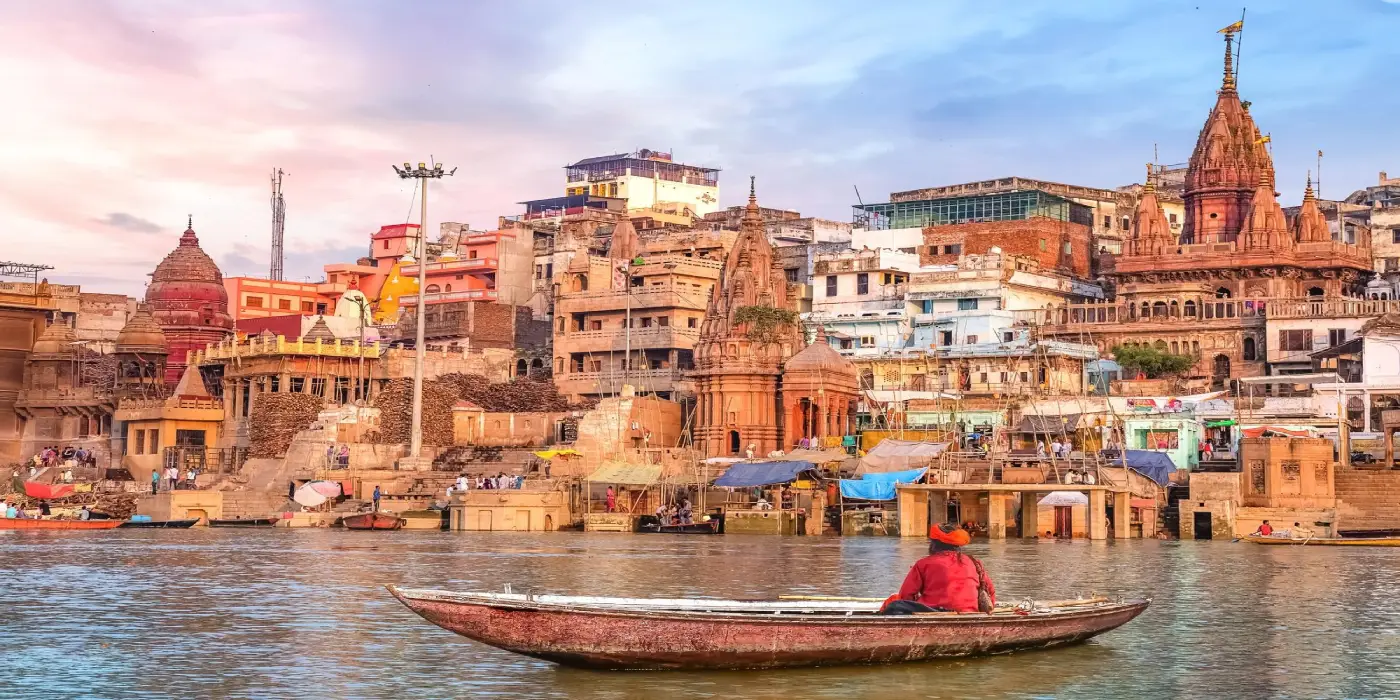
Board a flight to Varanasi, the oldest and holiest city of India established in the 11th century BC and today with over 2,000 living temples. Check-in to your hotel with time to freshen up before an evening cruise along the sacred river to witness the Aarti ritual. Enjoy a dinner at The Great Kebab Factory, a contemporary and stylish Indian restaurant specialising in delectable kebabs. Overnight in Tree of Life Varanasi or similar
Take a sunrise boat cruise past the bathing ghats and observe the people as they come to the river to perform their morning prayers and rituals. Following breakfast explore the Old City on a walking tour through the ancient by-lanes and discover the colourful and chaotic life that exists. Later visit Sarnath and the Deer Park where the Lord Buddha gave his first sermon with its archaeological museum. Return to the hotel and enjoy a musical performance comprising a sitar and tabla before your farewell dinner. Overnight in Tree of Life Varanasi or similar
Check-out after breakfast and receive a group transfer to the airport or the Taj Ganges hotel.
Embark on a magnificent 15-day voyage along the upper stretches of the holy Ganges River with the Pandaw River Cruise. Traversing from the colonial splendors of Kolkata through the rural heartlands of West Bengal and Bihar, this expedition uncovers historical landmarks, wildlife, ancient Buddhist sites, and the spiritual hub of Varanasi.
Level of Physical fitness required for the Lotus of India tour?
Guidelines for Different Religious Sites
Typical Dress Code for Churches and Cathedrals
Dress Codes in Mosques
Tips for Respectful Attire
Layering for Comfort and Respect
Understanding Local Customs
Cancellation and Refunds Policies
Land Portions Refund Datelines: ( Hotels, Tours services, Sightseeing tours )
| Number of days prior to Departure | Cost of Cancellation (Minimum Cancellation after booking) |
|---|---|
| 120 days or more | 15% of the total tour cost |
| 119 to 60 days | 25% of the total tour cost |
| 59 to 30 days | 50% of the total tour cost |
| Below 30 days | 100% of the total tour cost |
Foreign travelers often worry about physical strain, especially seniors and couples. Physical comfort is managed proactively rather than reactively. Private tours control walking distances. Vehicles drop travelers close to sites, and visits are planned during less crowded hours.
Food concerns are extremely common. Travelers worry about hygiene, food spice levels, and digestive issues. Private tours ensure meals are taken in reputable restaurants and hotels where hygiene standards are controlled. Spice levels are adjusted, and dietary needs are respected. Most food-related problems occur when travelers eat randomly or without guidance.
Travel anxiety often peaks around “what if” scenarios. Delays, illness, missed connections, or fatigue worry travelers before booking. Private tours include contingency handling. Drivers, guides and operators respond immediately to changes without traveler involvement. This safety net is one of the strongest reasons foreign travelers choose private tours.
Fear of rushed itineraries is common, especially among travelers who have seen aggressive group tour schedules. Private tours are paced according to traveler energy, not preset checklists. Days are balanced, and sightseeing is spread logically. Foreign travelers often say they see less but understand more, which improves satisfaction.
India requires more planning than many destinations because of its scale and diversity. Foreign travelers often underestimate travel times, climate differences, and regional variations. Private tour planning absorbs this complexity. Routes are optimized, rest is built in, and seasonal factors are considered. Good planning reduces surprises, which is essential for confidence.
There is a misconception that private tours are only for ultra-luxury travelers. Private tours exist across comfort levels. The defining feature is personalization, not price. Even mid-range private tours offer better control and ease than budget independent travel. Luxury private tours simply enhance comfort further through premium hotels and experiences. Foreign travelers choose private tours not to show wealth, but to avoid friction.
From
From
From$14,680.00
From$6,180.00

From$0.00
From$7,185.00
Authentic India. Exceptional Journeys
Top Destination
Information
Follow Us

No hay valoraciones aún.